Preserva NEXT: Artificial Intelligence-based Oocyte Assessment (VIOLET™)


Fertility preservation through egg vitrification is a procedure that allows women to freeze and store their eggs for future use.

This is useful for those who wish to postpone childbearing for social or medical reasons. 

Frozen eggs can be thawed and fertilised in the future to achieve pregnancy.

This treatment makes it possible to postpone motherhood without the passing of time being detrimental to the future possibilities of becoming a mother, as the deterioration of the quality of the oocytes means that from the age of 35 onwards the chances of pregnancy suffer a notable decrease.

STAGES OF THE PROCEDURE
01 Previous Tests

Medical consultation: Assessment of the woman to determine the appropriateness of treatment.

Diagnostic tests: An ultrasound scan with antral follicle count is performed to assess ovarian reserve (the number of eggs available), as well as anti-mullerian hormone (AMH) and general blood tests.

02 Procedure

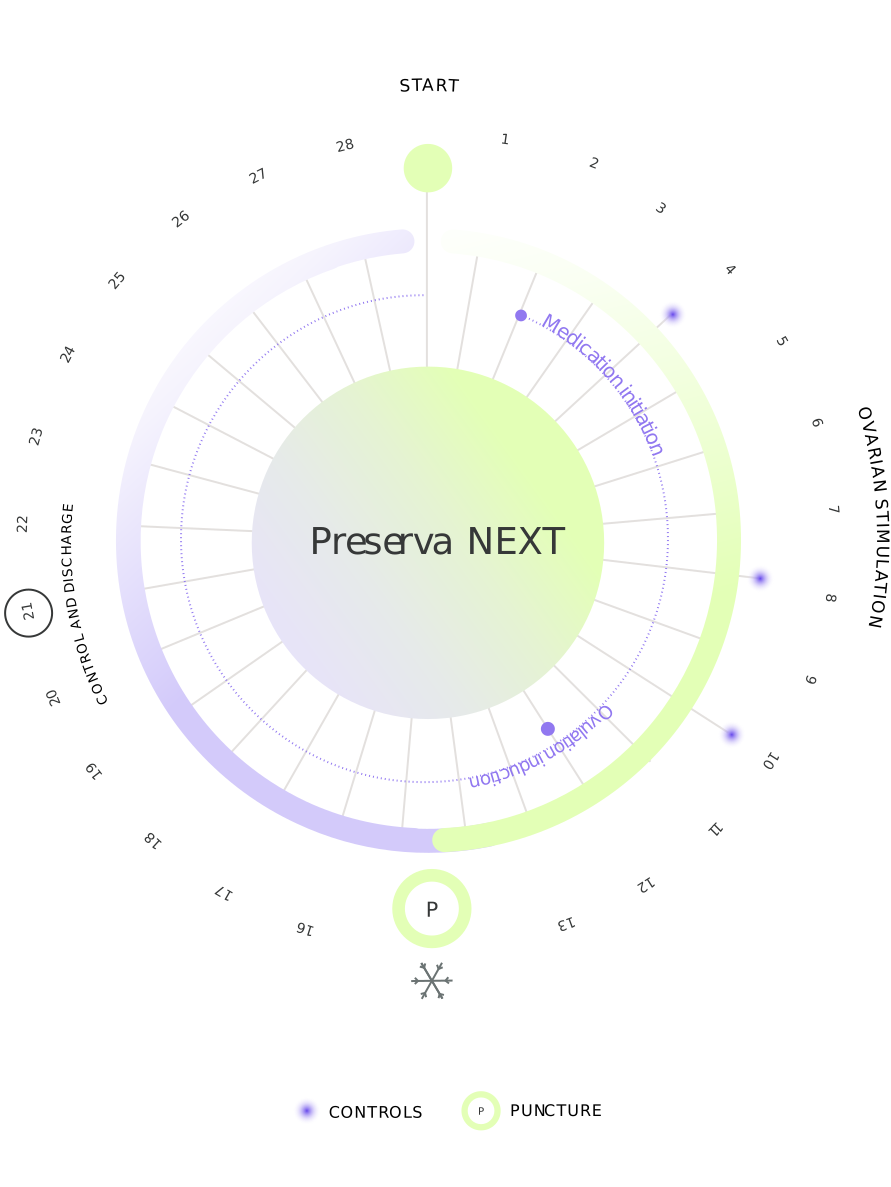
Hormonal stimulation: The woman receives hormonal medication, usually through subcutaneous injections, to stimulate the production of multiple follicles in the ovaries.

Monitoring: Follow-up with ultrasound scans and, if necessary, blood tests to assess follicular growth and hormone levels.

Ovulation Induction: Once the follicles reach the right size, an injection is administered to trigger ovulation.

Follicular Puncture: This is the procedure in which the eggs are extracted from the ovarian follicles by means of a vaginal puncture guided by ultrasound. The follicular puncture is performed in the operating theatre under sedation. The procedure lasts between 15-20 minutes. Afterwards, the patient remains under observation for 2-3 hours and is discharged the same day.

Artificial Intelligence-based Oocyte Assessment (VIOLET™): VIOLET™ is an AI tool that evaluates the quality of oocytes based on image analysis and provides personalised predictions of the probability of obtaining blastocysts and having a baby (live birth) with he eggs obtained.

Egg Vitrification: The collected eggs are subjected to a vitrification process at -196ºC, a quick-freezing technique that prevents the formation of ice crystals and improves the survival of the eggs upon thawing.

Procedure
03 Storage

Egg banking: Vitrified eggs are stored in liquid nitrogen in an egg bank until the woman decides to use them.


Fertility preservation through egg vitrification is a procedure that allows women to freeze and store their eggs for future use. This is useful for those who wish to postpone childbearing for social or medical reasons.


WHO IS IT FOR?

There are two main reasons for preserving oocytes:

  • Social reason: Women who wish to delay childbearing for personal, professional or lifestyle reasons.
  • Medical reason: Patients with medical conditions that may affect future fertility, such as oncological diseases, autoimmune diseases, ovarian endometrioses, among others. Also those with low ovarian reserve or with a family history of premature ovarian failure.

SUCCESS RATES

In Fertty, according to statistical data from the 2021-2024 period, the oocyte survival rate after thawing own oocytes was 96.8% in women who froze them at the age of 35 or younger, 80.87% in those who did so between the ages of 36 and 39, and 61.2% in women who froze them at the age of 40 or over. The average survival rate after thawing at our centre during the indicated period was 79%.

FAQs

Ovarian stimulation may cause mild discomfort similar to premenstrual syndrome. Follicular puncture is performed under sedation, so there is no pain during the procedure. On the day of the follicular puncture you may experience menstrual-like discomfort, which is usually relieved by conventional painkillers.

Complications with this procedure are very rare, but can include infection, bleeding and ovarian hyperstimulation syndrome (OHSS).

The average duration of treatment is approximately 10-14 days from the start of ovarian stimulation to egg retrieval.

Eggs can be stored indefinitely. However, their use varies from country to country. In Spain, they can be used until the age of 50.

Ideally, we recommend egg freezing before the age of 35 for best results. However, this procedure can be performed up to the age of 40, although the success rate is lower. Egg freezing is not recommended after the age of 40, although each case must be assessed on an individual basis.

It is possible that not all eggs will survive the thawing process or that not all eggs will successfully fertilise. It is advisable to discuss these possibilities with your doctor before treatment.

MAKE AN APPOINTMENT

Ask for an appointment without any obligation.